Thursday, June 13, 2013

On Translation: The Ultimate Literature

When I first began to teach creating writing and comparative literature at Goddard College, in 1994, I often spent days on end preparing materials for workshops. The chief reason was that, when I presented workshops on Latin American literature, the poems and stories I wanted to use were not found in one single anthology, or even two or three. Quite often what I wanted had not been translated into English-- or worse, the available translations were very poor quality. If we were lucky and the story I was after had been translated by a virtuoso, such as Gregory Rabassa, then it was wonderful. I felt certain that the experience my students would have would be genuine, and they'd be able to enjoy a reading that would come as close as possible to the original.

But when I wanted to teach little known writers, or newer writers whose work had not been translated yet, or obscure poems that would never end up in an anthology, that's when I had to get to work and do my own translations. Before this, I had translated for technical or non literary publications over the years, and on occasion for the Conditions: Feminist Literary Journal. Translation of poetry in particular is very difficult, and I'm not sure one really ever succeeds (nor should one hope to, since that is the sad beauty of language). Teaching literature was my gateway to the necessity of translation for the sheer love of the thing I wanted to share with other people.

This is how I came to translate this short story by Marta Brunet, a marvelous Chilean writer whose first novel, Montaña adentro (1923) surprised critics who did not expect such sophisticated and strong prose from a woman writer. The short story I've translated here, "Piedra callada," is from a short story collection: Soledad de la sangre, published in 1967, the year of Brunet's death. I received these two books from my mother, who knew I loved to read and that I would someday write as well, and I'll always be grateful for this. Brunet became my favorite Chilean narrative writer as I grew older-- my first love was Marcela Paz, author of the young adult series, Papelucho. Later I read the work of María Luisa Bombal, and I would have another favorite.

What I love about this story is the way it seems to stay with the reader as a perfect composition: smooth,   swift, accurate, just like the silent stone of the title... which be read as a metaphor for many things. The strong characterization, the masterful exposition, the unforgettable descriptions of the southern Chilean valleys, hidden in the mountains under the majestic peaks of the Andes: I think you'll like this story.

Here is part I of "Silent Stone," by Marta Brunet.


Silent Stone

Translation by M. Romo-Carmona

When Esperanza said she wanted to marry Bernabé, her mother gave her a beating for an answer, a simple way, but a way she deemed infallible, to drive the idea out of the girl’s head. The girl didn’t utter a single cry and as soon as she could she escaped to tell her troubles to the boss’ wife, la Patrona.
                  “When is she gonna let me get married! Every time I have a prospect she chases him away. She just about took a slingshot to the youngest of the Machucas... not to mention the beatings I get. Talk with her, if you’d be so kind, and reason with her. I’m nearing twenty-- is she aiming me for an old maid?”
                  La Patrona looked at the girl, looking vaguely thoughtful. It was not unusual that she would be sought after. She was pretty, well mannered, almost a small-town servant, living always near the house and her protection.
                  “But, what does she tell you?”
                  “This time she ain’t said nothin’. She just beat me. But other times she says she ain’t brought me up like a flower for the mules to eat. Her old lady notions… ‘Cause after all, Patrona, I’m nothin’ more’n a country girl, fit to marry someone from around these parts".
                  “And, who wants to marry you now?
                  Esperanza hesitated a moment before answering: “Bernabé, the Vellares’ son, the real good-lookin’ one, the one who works along the fences.”
                  “But, he’s a beast...” la Patrona concluded after she remembered the young man.
                  “I love him a lot... I know he’s like that, a little dense-- but good, hardworkin’, anybody at the ranch can swear to that! And he ain’t got no vices, keeps his things neat... he’s a little thick, that’s all.”
                  La Patrona looked at her in suspense, at a loss for what to do because it wasn’t the first time that the matter came up, that the girl came to ask for help to stand up to her mother who allowed no will but her own. She couldn’t systematically oppose that Esperanza eventually marry. These were jealousies of the mother who had only one daughter, widowed herself and struggling desperately to bring her up, helper to the miller when her husband died, who had held this position for years and operating with such skill that it was actually she who now supervised the mill. The ambition of a mother who perhaps wanted a man of greater means as husband for the girl, not rough peons who would never be anything else. But, where to find such a husband? Her world, of course, would have to be in the country, in the mountains. Her destiny, to marry a young man born there. To own a ranch. What else? Because more than that, than the young sons of the renters, there wasn’t another single man in the vicinity. Where, then, could a husband be found for Esperanza who, in truth, was immensely superior to her surroundings?
                  Weary, then, from brooding so long upon something that concerned her slightly, not very much, she wasn’t sure whether it was slightly or greatly, la patrona put forth a definitive question.
                  “But, you’re sure you love that Bernabé?”
                  Esperanza performed the classic gesture of rolling up and unrolling the corner of her apron, answering without preamble: “Patrona, he’s the one I’ve loved the most. The others, I loved them just a little. I love this one a whole lot. He’s good and he loves me a lot, too. Of course he is a little thickheaded--” she hurriedly concluded, because la patrona sustained her gaze, as though she wished to see into the depth of her soul.
                  In reality, she wasn’t looking at her, given, as usual, to her own vague thoughts.
                  “All right, then. I will speak with your mother.”
                  “Of course, if you’d be so kind--” and she turned very charming, enchanting she was that way, with her eyes very small and shining, with two dimples on her cheeks so much like fuzzy peaches, and such a turned up nose, and a pout for a mouth of a girl who knows herself pretty and speculates around her appeal. “If you would be telling the patrón to give us a parcel of land, because that way my mother wouldn’t have much to say and, having a ranch assured, no one would look down on Bernabé and, everything would start off better... you’d be so kind to tell the patrón, no?”
                  “Yes, yes, I know you, how good you are at buttering up, don’t worry.”
                  She remained thinking, going from one cloud of ideas to another, which was her way of thinking, that perhaps she could take Esperanza with her to the city as a maid, or send her to school, or let her help the nurse who cared for her own mother. She gestured with her hand, as though erasing something in front of her eyes, no, that was too much responsibility. How pretty the girl was... perhaps, instead of marrying her off-- she suddenly though of the chauffeur, an excellent man with a sister, single, who might fall in love with Esperanza and marry her if-- instead of marrying her off, one of those ugly things that happen, that only exist in novels or films and suddenly happen in real life... and the mother, old Eufrasia, she’d never just let her go. Of course she wouldn’t take on both of them. Although the old woman would be useful as a washerwoman, or to make preserves, or to open the gate when the coaches arrived. Again, she made the gesture of erasing something before her eyes, something that hung there, without shape. She finished by going very quickly to her room, remembering suddenly that it was now time for the radio drama that was so full of unexpected events.
                  Of course, she forgot to speak with Eufrasia, but Esperanza came the next afternoon and didn’t let up until she called the mother in and had a session with her.  Out of this, she derived nothing because that day la patrona was even more lost in the clouds than usual, in her own limbo, and the old woman left triumphant with her answers and arguments.
                  She was a tall, old woman, curved profile and a thin mouth, tight lips with the lower sealing a will that knew its goal, but that also knew how to arrive there through shortcuts, crawling, in between long waits, if the direct way turned difficult with obstacles. Returning to the mill, without major explanations, she gave Esperanza a beating. With this, the latter understood she would have to find another means of support if she wanted to marry Bernabé.
                  She went, then, to try the boss, el patrón. Stamped out of an old block he was a replica of the grandfather who fought in the war of independence. To him, Esperanza said the same she had said to his wife. Immediately, he called Eufrasia to him. Ten minutes later, out of the study came an accessible old woman who crossed Bernabé on her way-- also called by el patrón. She eyed him coldly.
                  “‘Afternoon.”
                  To which the man only managed to respond with an unintelligible grunt. Inside, el patrón told him:
                  “Well, then, Eufrasia agrees to your marrying Esperanza. You are serious and you work well. Since you will need a home, I will give you the ranch of Don Valladares by the lagoon. Valladares wants to come here, to be near the school and educate his flock of kids, a wish I deem very sensible. You marry and you go up there. The ranch is new, and there you have work enough for years; that whole boundary needs to be fenced off. I will speak with the administrator about the conditions of your leaving, and now, to be a steady fellow and to behave very well with Esperanza.”
                  Bernabé answered with another grunt, flipped his straw hat two or three times in his huge hands, put his head down and charged towards the door. He seemed almost rectangular, with horizontal shoulders and enormous feet whose toes turned out, the arms hanging and all of him knotted into strong muscles. Upon this giant’s body the small head, round, rose above the neck disproportionately thin, the Adam’s apple huge and wavering. A narrow forehead, the stiff hair of a brush, slits of eyes barely gleaming under the heavy cautious lids, a mouth of thick lips, a beardless face and in this negative ensemble in which a spirit seemed to find no harbor, the bizarre beauty of impeccably white, shiny teeth.
                  Back at the mill, Eufrasia spoke coldly and firmly to the daughter, who awaited her alarmed and anxious.
                  “El patrón wants you to marry Bernabé. You can marry whenever it strikes your fancy. But from this day you have a mother no longer.”
                  It was a short engagement among the hostile silences of Eufrasia, the chatter of the daughter akin to that of a bird frantic with sun and, the other silence, of the man, a presence that incensed the mother with rage while signifying for Esperanza two ears attentive to her words, the acceptance of all her projects, a latent defense of-- finally!-- the actualization of her will, omitting that of her mother.
                  Bernabé went to the ranch, already vacated by don Valladares. He came back saying, with his scarce slices of words, that it was just fine, that it needed no adjustment, that the menagerie he had carried by mule had arrived in one piece.
                  They married in the small neighboring village, and from there-- they had only been accompanied by witnesses and attendants, since Eufrasia had clearly stated she wanted no celebration-- the just-married headed towards the ranch, next to the blue orb of the lagoon, deep in the range of the Andes.
                  Eufrasia made herself harder, more cavernous, more resolved in her work. Nothing was known of the new couple. The lagoon was at the edge of the property. The road was only accessible up to a certain height by vehicles, and from that point at which one entered fully between virgin mountain forest, there was a trail for horses, tortuous, avoiding downward streams, going from one side to the other of the river that slowly widened its current, until one arrived at that amphitheater of peaks, and the river bedded down to form the smooth face of the lagoon. From one side it was edged by the mountain, thick, sliding into the water at the base; from the other a small valley opened, and there, upon a small plane, the ranch had been placed, wooden, squat, surrounded by stalls and shacks. The lagoon seemed blind. But on one end, the mountains curved, opened up a narrow splice and through there, noisily, through lichens and vines, in an ambience of green moisture, the water threw itself down a cliff in order to continue its tumultuous search for the sea.

                  No one could bring any news from the distant ranch. Eufrasia seemed not to expect them. She never mentioned the daughter. With a deaf rancor towards her, with a deaf resentment toward the patroness who imposed the marriage. Let her be happy or wretched, it was the same to her. She entrenched herself in indifference.
                  “It doesn’t matter... it doesn’t matter at all. Let her suffer if she’s got to suffer... why did she get married? She knew very well what she was doing...”
                  But, the “let her suffer...” was the repeated singsong of her heart, rhythm of her blood, a wheel like the mill, never still and milling the renewed grain.
                  Bernabé didn’t even need to come to the houses for provisions because in that enormous property, having been a territorial assignment of colonial times, there were five stewardships under the supervision of a general administration and the man was now under the orders of the first daughter-parcel, where he must go for his replenishment and everything concerning his job. He made a journey every few months and once a year, the majordomo went to the lagoon to take a look at the fences. From the visits that Bernabé made to the first-daughter land parcel, little was obtained-- that the man continued to be reticent and answered questions with stumbling words and not many of them. It was the majordomo who brought news:
                  “Esperanza is very thin! She looks like a stick of garlic! With so many kids, and never leaving the ranch. A good worker, though, the same as he. A beast like that has never been seen! You should see the dock he’s built himself at the lagoon, and a dandy boat, and since there’s so much fishing, there’s always a trout chowder, or salmon. You should see! And the ranch is well fixed up because she’s such a lady, Esperanza, it’s good to see. If she weren’t so thin. The oldest girl is just like her, like Esperanza, the same eyes, the same ways about her...”
                  The majordomo’s wife, doña Cantalicia, found pretext for visits to the houses, especially to tell the news to Eufrasia, who tightened her lips, enhancing that gesture that likened her to wilful mask; that hardened the edge of her jaw, sealing with her lower lip the upper that disappeared under its pressure. But she made no comment, none, to the great annoyance of doña Cantalicia.
                  “Because even beasts must want to know about their children...” she said to herself, very upset inside. And she would take relief in endless chatter with the womenfolk in the other houses.
                  Eufrasia completed thirty years in the mill. Thirty years! A lifetime. The boss called her and in his straightforward way, without discussion, told her that she was being retired with full salary and that she could choose between staying at the mill in the apartment she had always occupied, but without any intervention in the work, or living in the house of the employers in some rooms that would be given her, free to do whatever she wished. How well she  had earned the right to rest!
                  “I am not tired. I need no rest--” she protested, adding rapidly: “But if el patrón has already decided what he wants me to do... there’s but bowing my head and, amen.”
                  “Do you want to stay at the mill?”
                  “To me the mill is the job. I don’t need to stay there with my hands folded.”
                  “Talk with my wife, then, and arrange the move. There are two rooms in the back courtyard that will be comfortable for you.”
                  “Thank you,” said the old woman, dryly, and forcing herself to greater amiability added, “Thank you very much for everything.”
                  She installed herself in those two rooms that were assigned to her. She spent days on end hostilely locked within them and herself. But finally she began to abandon her corner and to take part in the activities of the enormous house. One day, without anyone asking her, she washed, without help, all the windows of the gallery around the courtyard. Another, she went with a mattress on her back to an end of the yard and there organized a veritable shop, fluffing wool, washing tapestries, re-stuffing, sewing. As soon as she finished one of these tasks, she sniffed around the house and its outbuildings until she came across another one.
                  The years didn’t take toll on her energy. The same years had accentuated certain characteristics in others, and so, la patrona, sweet and absentminded, explained upon seeing her working, with the singing accent of a refrain:
                  “What a pearl is Eufrasia! What a pearl is Eufrasia!”
                  When returning from his rides on horseback near dusk, el patrón would often see her helping to round up the pigs or the calves, using a slingshot to wake the ones lagging behind.
                  “That one, Eufrasia, good shot!” And with one of his sudden smiles added the authoritarian tones that time hadn’t mellowed-- “Watch that you don’t use big stones and leave an animal lame.”
                  One day, doña Cantalicia came, as usual, with her basket of news.
                  “Esperanza is pretty sick. So many kids and so many abortions. What can one expect, that’s what my husband says. And Bernabé wants nothing to do with taking her to town so the doctor can see her. He’s such a beast, poor man! No wonder you didn’t approve of this marriage. But the thing is that Esperanza is all bones; sometimes she spends days without being able to get up, and when she gets up, she drags herself, barely. I know you don’t like talk of these things, but it’d be a sin not to come and tell you.”
                  “Thanks for the soap opera--” answered Eufrasia, turning her profile, ending the conversation. It squirmed inside her like a bug. Sick, in bed. Dragging herself. But she’d become furious with herself and try to impose the rancorous old tones, “let her suffer! She’ll know what’s good! Tough luck!” But she couldn’t fit the words in their old rhythm of a refrain, suffocated by waves of anxiety, each time crashing louder within her, darkened by a storm.
                  A short time later the boss called her in.
                  “Look, Eufrasia, the majordomo of the first-daughter tells me that Bernabé went to town with Esperanza very ill. She’s in the hospital. The kids are alone at the ranch. I think you should go take care of them.”
                  “I don’t go where nobody calls me.”
                  “But you go where your boss sends you.” Their eyes met and the old woman finally shifted hers, as always, before the will of man and landlord.
                  “Very well, patrón.”
                  “Gather your things. I’ve ordered a boy to guide you there at dawn. You’ll go by coach up to the first-daughter, from there you’ll continue on horseback with your gear on mules. See how things are there, stay as long as you deem it necessary. I already telephoned the majordomo to tell him to warn Bernabé that I ordered you to care for the children.”
                  “Thank you.” She seemed relieved, as if the waves that kept hitting her chest had turned soft. She spoke not another word.
                  The boy traveling with her was a bit uncomfortable with that silent company; he looked at her out of the corner of his eye at the same time he admired Eufrasia’s drive, who endured a jostling ride, dust and wind, heat, thirst and fatigue without protest.
                  Doña Cantalicia had brought more recent news.
                  “My husband phoned the hospital, ordered by el patrón, don’t think it was our aim to snoop. He spoke with mother superior who told him, after many delays to consult the doctor, that they’d have to operate on Esperanza, internal you know, and that the doctor said that after the operation she’d be at least a month in bed and after that month, he’d see if he’d let her go back to the ranch or not. That it isn’t really serious what she has, but that it’s serious.”
                  The old woman tightened her lips, presented her profile perceiving the damp breath of a well passing, and said nothing.
                  Exhaustion had apparently made no dent on her when she arrived at the lagoon. She immediately straightened the mess that was everything, dirty and disarrayed. Starting with Venancia and the five little ones. Taken by surprise, knowing not what attitude to assume before that grandmother who appeared unannounced and of whose existence they had only a vague inkling, a grandmother who looked long at them, who placed over the head of each one a hand that was not quite a caress, but a sort of possessive gesture, while she asked their name. Right away she examined ranch and surroundings and began to give directions, to work herself, with that method that turned speed into a miracle.
                  Before leaving at dawn of the next day, the boy saw a ranch perfectly neat and children clean and docile to the grandmother’s command. He carried back a list of things absolutely necessary, a list that Eufrasia sent to the boss with a letter, asking that they be charged to her own account and to please send them right away, besides other things of her own menagerie.
                  El patrón understood this and sent the boy back with a loaded pack of mules.
                  This is how the children saw a sewing machine for the first time and each one slept in a bed and had clothes that could be called such and not rags.

✦

Continued next post.

Tuesday, June 11, 2013

El Quijote oriental: Un ensayo para el siglo XXI


El Quijote oriental

            El Quijote que leemos no es el mismo Don Quijote que se encuentra por todo el mundo en bibliotecas de caoba, impreso en papel biblia, en tomos de cuero con letras doradas. El libro que leemos es ése que nos regalaron a los ocho años, ilustrado y adaptado para niños, que nos queda en la memoria para siempre; es un Quijote personal. Pero no nos percatamos de lo valiosa que es esta relación tan particular hasta que llegamos a leer el libro de Cervantes como adultos, y allí nos encontramos finalmente con el verdadero.
Con los años, hemos madurado, y la historia de El famoso hidalgo Don Quijote de La Mancha se ha vuelto más fascinante de lo que pudiéramos imaginar en el transcurso de los años, pero también se torna melancólica, reflejando la desilusión de un Quijote que pierde su fe en la humanidad. Es precisamente en este nexo de experiencia literaria y análisis teórico en que se vislumbran aspectos históricos del ambiente del escritor y su novela, que tal vez nos permitan acercarnos a nuevas posibilidades de interpretación. ¿Es el Quijote una obra estrictamente occidental, o existe la posibilidad, 113 años tras la expulsión semítica de España, que su ubicación temporal la defina como obra híbrida cultural y literaria? Es más; ¿es posible que el mismo Cervantes la escriba así, consciente de habitar tal crítico cruce de culturas? Naturalmente, es imposible considerar tales preguntas a no ser que sea retóricamente, no obstante el tema de la realidad cultural que puede haber habitado Cervantes me fascina cada vez más. En el primer capítulo del famoso libro, Orientalism, de Edward Said, el autor presenta la vasta extensión que ha llegado a llamarse el oriente, geográfica y culturalmente. Dice Said sobre la humanidad: “Men have always divided the world up into regions having either real or imagined distinction from each other. The absolute demarcation between East and West . . . had been years, even centuries, in the making” (39). Anclado en la edad entre el Renacimiento y el Barroco, Don Quijote demuestra la consciencia de aquella absoluta demarcación a que se refiere Said; pero Cervantes es además un sobreviviente de guerra entre el oriente y occidente, y producto de una tierra habitada por árabes por más de 700 años. En su vida como en su obra, creo que vemos más una fusión cultural perfectamente equilibrada.
            Hay varios capítulos que obviamente describen los encuentros entre Don Quijote y personajes árabes, moros y moriscos, pero me limito a una discusión de la historia del Cautivo (I:39)) y la de los moriscos Ricote y Ana Félix (II:63).
            La historia del Cautivo en la primera parte aparece en un lugar en la narrativa en que ya hemos leído varias novelas e historias intercaladas, habiéndonos habituado a leer las historias escritas, como “El curioso impertinente”, y las que se relatan a través de otros personajes, como lo es la historia de Marcela y Grisóstomo y también las historias que se cruzan y reúnen a varios de los personajes que están presentes cuando llega a la Venta el Cautivo con Zoraida. Siguiendo un patrón similar al de Las mil y una noches, los lectores nos vemos envueltos en historias que quedan enmarcadas dentro de los relatos de personajes viajeros. La historia de Ruy Pérez de Viedma, el Cautivo, nos lleva completamente fuera de la narrativa en que figuran Don Quijote y Sancho, ya que los personajes salen de España y salen del espacio temporal más limitado de otras historias. Es este aspecto se asemeja a las historias de peregrinos que viajan a lo largo de la ruta de la seda, y a través de las cuales se instruye al lector sobre pueblos, costumbres y eventos históricos que de otro modo no se sabrían.
            En el capítulo XXXVIIII, la descripción de lo que lleva puesto el Cautivo, es minuciosa: “. . . su traje mostraba ser cristiano recién venido de tierra de moros, porque venía vestido con una casaca de paño azul, corta de faldas, con medias mangas y sin cuello; los calzones eran asimismo de lienzo azul, con bonete de la misma color; traía unos borceguíes datilados y un alfanje morisco, puesto en un tahelí que le atravesaba el pecho” (240). Escrito en un castellano salpicado de palabras árabes que en esa época son parte del tejido del lenguaje, no deja de sorprender el cuidado de Cervantes como escritor en describir detalles como estos. La descripción también continúa con Zoraida, pero lo importante de ver en su personaje es su actitud, y cómo Cervantes nos deja en pocas palabras señales de que, por un lado tenemos a un personaje musulmán presentado como exótico, y por el otro, que los demás personajes saben exactamente cómo interpretar su atuendo y su comportamiento, cuando Zoraida “ni hizo otra cosa que levantarse de donde sentado se había, y puestas entrambas manos cruzadas sobre el pecho, inclinada la cabeza, dobló el cuerpo en señal de que lo agradecía” (ídem).
Se retratan además, personajes que, aunque se interesan en saber su historia, no se demuestran de ninguna manera hostiles para con el cautivo o con Zoraida. Dorotea, de hecho, es la única que parece servir de portavoz de la opinión popular, cuando pregunta si Zoraida es musulmana, diciendo que su silencio “nos hace pensar que es lo que no quisiéramos que fuese”. La respuesta del cautivo, quien dice que ella quiere ser cristiana, solo evoca de Luscinda la pregunta, “Luego, ¿no es bautizada?”, sugiriendo que sólo se trata de una diferencia académica (241).

La historia del amor entre Zoraida y Ruy  Pérez de Viedma transcurre a través de tres capítulos, incluyendo el largo episodio en que Pérez de Viedma adquiere los datos biográficos del propio Cervantes cuando fue prisionero de guerra, y son páginas repletas de referencias e información sobre la cultura musulmana que el narrador relata con completa autoridad. No hay duda de su verosimilitud. El encuentro entre Pérez de Viedma y la cultura musulmana tiene mucho que es posible analizar como el encuentro con “lo otro”. De acuerdo con Diane Sieber, el episodio del retorno a España por mar y las experiencias en Cava Rumía, señala un punto en que “Ruy Pérez has confronted alterity. His encounters while imprisoned in Algiers inform both his depictions of alien culture and his rereading of his former life in Castile” (Sieber 123). En efecto, el relato en primera persona del cautivo determina la actitud positiva que el resto de los personajes que están en la venta adoptarán con respecto a la unión de los dos amantes. En cuanto a Don Quijote, Cervantes ha creado una escena que concluye de manera solidaria, acercando a todos los personajes a la mesa, sentando a Zoraida junto a Luscinda como dos amigas. Es entonces, como cierre del relato, que Don Quijote encabeza su famoso discurso sobre las armas y las letras que sigue en el capítulo siguiente (242).
Contrastando con la feliz resolución otorgada a Ruy y Zoraida, en el capítulo LXIII la narrativa de la segunda parte se torna característicamente pesimista. La historia de Ricote y Ana Félix se desarrolla con el telón de fondo de la expulsión de los moriscos de España, en 1609. Si consideramos que Cervantes la concluye sólo seis años más tarde, los efectos del edicto de Felipe III se deben de haber hecho sentir precisamente en esa época. La introducción de este episodio comienza anteriormente con el encuentro entre Sancho y Ricote, que es su vecino en La Mancha, y quien le pide ayuda para recobrar su dinero y rescatar a su hija, Ana Felix. Las circunstancias de esta historia no se desarrollan como otras en que un personaje comienza a contarla. Esta vez, con los recursos literarios de un autor de ficción realista moderna, Cervantes lleva a los personajes a Barcelona, donde los eventos se desarrollan en un arco narrativo, acción siguiendo a causa, y cada evento causando el siguiente. Don Quijote y Sancho presencian el desenmascaramiento de Ana Félix cuando su bergantín es capturado y se le lleva a las galeras para ser ahorcada.
--Ni soy turco de nación, ni moro, ni renegado.
--Pues, ¿qué eres? –replicó el virrey.
--Mujer cristiana –replicó el mancebo.
--¿Mujer, y cristiana, y en tal traje, y en tales pasos? Más es cosa para admirarla que para creerla. (632)
El carácter emocionante de la narrativa en este punto, con sus reversos y peripecias, dejaría muy orgulloso al mismo Aristóteles. La estructura, asimismo, de la escena en que se captura el bergantín y Ana Felix—y luego su padre—se revelan ante todos, funciona con debido suspenso ya que dos de los soldados del virrey han sido muertos por la tripulación del barco de la muchacha que está vestida de arraéz. Es un momento cinemátográfico que resultaría clásico y de rigor hoy en día. No obstante, la escena posee mucho de los rasgos de los relatos en Las mil y una noches en que se detiene una pena mortal con la llegada del que es realmente culpable, o de un personaje que cuenta su penosa historia y consigue ablandar el corazón del califa que ha pronunciado la sentencia. En “La historia de las tres manzanas”, un rey está a punto de ahorcar a su visir cuando se descubre el culpable y cuenta su historia, lo que lleva a otros relatos hasta que finalmente se desenreda el misterio. De acuerdo con Husain Haddawy, el traductor de la más completa versión hasta ahora, The Arabian Nights está lleno de sorpresas y accidentes que producen lo inesperado; “Yet both the usual incidents and the extraordinary coincidences are nothing but the web and weft of Divine Providence, in a world in which people often suffer but come out all right at the end” ( Haddawy xv). Además, afirma Haddawy, que los personajes demuestran “el placer de una aventura maravillosa y un sentido de asombro que hace posible vivir la vida, mientras que los lectores se benefician al escapar a un mundo exótico en que se cumplen los deseos, y los actos de transformación se pueden apreciar en términos freudianos como la satisfacción de superar un obstáculo” (íbidem) (mi traducción). En la segunda parte de Don Quijote, claro está, su mundo se ha dado vuelta al revés, y Don Quijote tiene pocas razones para disfrutar su “aventura maravillosa.” Sin embargo, constato que los mismos elementos culturales que forman parte de los recursos literarios, existen en la imaginación de la época, y son inextricables del tejido de esta obra.
            Ahora bien, la estructura de la expulsión de Ricote es una que se entrelaza en el hilo de la narrativa, comenzando en el capítulo 54 y resurgiendo más tarde habiendo cambiado ya las circunstancias de la familia. Cuando Ricote entra en escena, la narrativa está en movimiento. La acción avanza hacia adelante con un fijo propósito, que es el de llevar a Sancho Panza a encontrarse con Don Quijote. Al hallar a su antiguo amigo y vecino nos encontramos con dos páginas de diálogo y varios pasajes de exposición en que se explica cómo se han desarrollado los eventos del edicto de expulsión. Aunque el episodio es breve, y luego volvemos a seguir a Sancho sin que se haya cambiado la dirección, el abarcamiento de la novela ha cambiado radicalmente, y de manera similar a lo que ocurre en la primera parte durante la historia del Cautivo: El mundo exterior o histórico ha entrado en la novela. Estos dos son puntos claves, aunque tienen efectos diferentes. Cuando aparece Ruy Pérez con Zoraida, el mundo exterior no entra en la novela directamente, sino que la narrativa nos lleva fuera en sentido geográfico al salir de España, pero sólo temporalmente, ya que el presente de la narrativa continúa tomando lugar en la venta. Es mediante la narrativa en primera persona que llegamos a la prisión de Argel. Es más, dentro de dicha narrativa, llegamos al tiempo en que Zoraida vive antes de conocer a Ruy Pérez.
            En la segunda parte, la trama de la novela realmente incluye la realidad del edicto, de la situación en que Ricote ha sido separado de su esposa y su hija, y más adelante en Barcelona, el desenlace parcial en que Ricote se reúne con Ana Félix. De nuevo, Cervantes introduce, en el personaje de don Gaspar Gregorio, la posibilidad de una unión matrimonial entre un cristiano español y una mujer que esta vez es descendiente de musulmanes. Se puede tal vez sugerir que el autor de esta trama desea proponer la aculturación musulmana en España, especialmente en vista de que los moriscos son ya conversos, y no “moros”. Cervantes claramente describe los intentos de Ricote de permanecer en España como cristiano, y la situación en que, a pesar de ofrecer “liberalmente” (LXIII) su dinero, se encontraría ya que el edicto le ha despojado de su hogar y sus bienes. Christina Lee, escribiendo en Hispania sobre el carácter poco fiable de Don Antonio Moreno, opina que a pesar de el retrato halagador de Moreno, “. . . muy al contrario de la exposición propagandista que nos hace el narrador aquí, el don Antonio que se va desmarañando es otro; sí ‘rico y discreto’ pero también fraudulento, avaro, calculador y cruel” (Lee 33). De hecho, a medida que se desarrolla el encuentro con don Antonio, Don Quijote queda mal parado, ridiculizado, y enfermo. Es un cruel desencanto el que presencia el lector en estos últimos capítulos que, a pesar de haber sido escritos con gran prisa como muchos estudiosos afirman, contienen elementos brillantes que retratan una época posiblemente decisiva para la nación que se deshacía de su propia gente, vaciando sus costas de los “otros”, aquellos que todavía, escasamente, se pudieran definir como tales. Con el final inconcluso de la suerte de Ricote, y de Ana y Gaspar, se divisa ya una España que se va quedando casi tan vacía como las ilusiones de Sancho y Don Quijote.
En conclusión, Don Quijote es una obra cuyo autor, Miguel de Cervantes, decide co-escribir con un ficticio historiador musulmán para relatar la historia de un ingenioso hidalgo, pero también de su cultura. En Don Quijote, se encuentran dos puntos claves, en la primera y segunda partes, en que la creación de personajes moros y moriscos en roles principales realzan la verosimilitud de la obra. Las historias de Ruy Pérez y Zoraida, y de Ana Félix y su padre Ricote, posicionan la narrativa en contacto con el mundo histórico exterior, algo que pocas novelas logran con éxito aun 400 años más tarde. Situada en un lugar y una época de crisis cultural en España, en que un importante sector de su población se desgajaba por segunda vez, Don Quijote es una obra de origen híbrido que comenta con una voz universal sobre la condición humana. En su totalidad, el Quijote es una obra como ninguna otra, y es difícil, sino imposible, juzgar el efecto que obras anteriores tuvieron en ella ya que casi toda la narrativa occidental que le sigue ha sido influenciada por El Quijote.
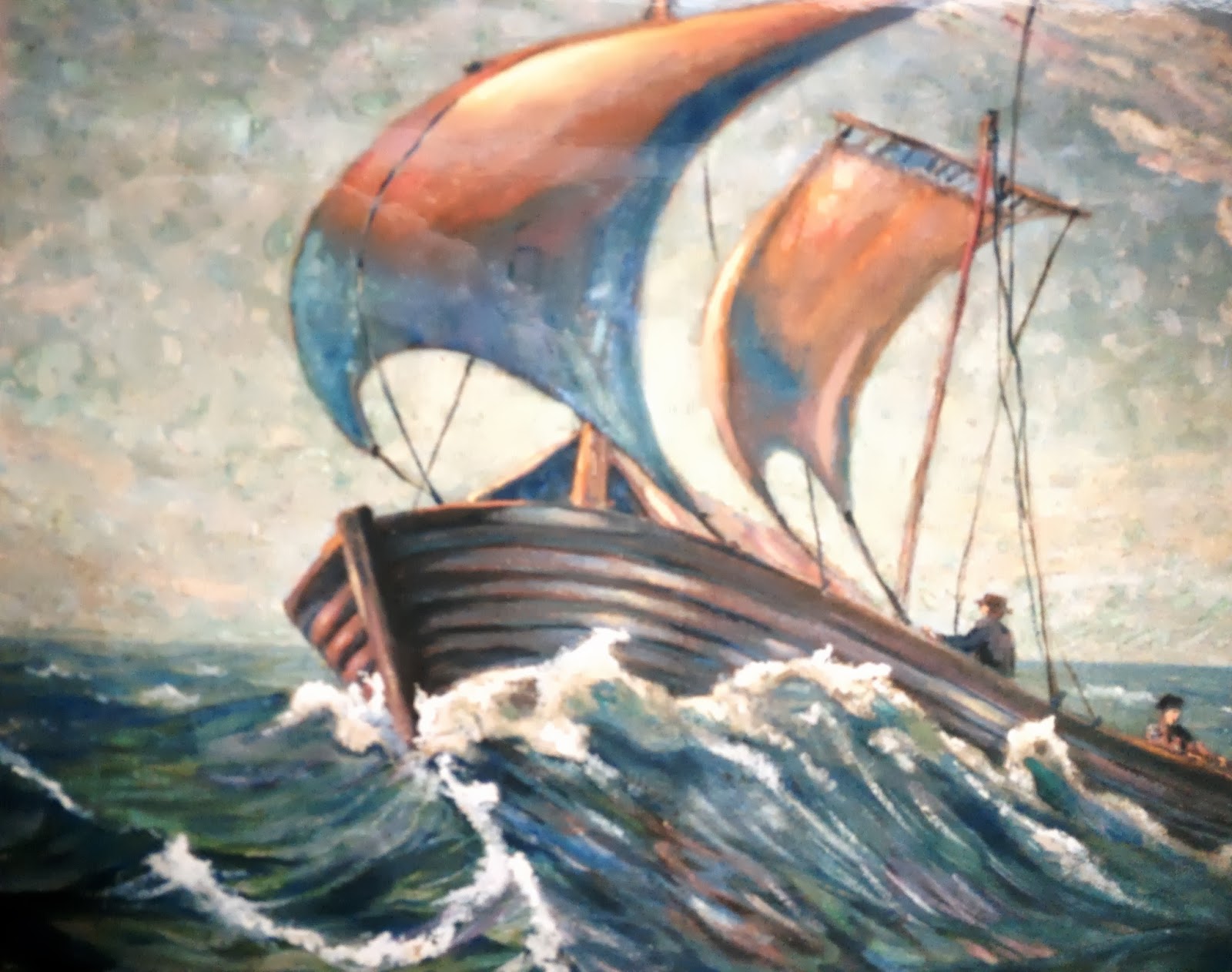
Cuadro original en óleo de José Romo Vargas, pintor chileno

Bibliografía
de Cervantes Saavedra, Miguel. El ingenioso hidalgo Don Quijote de la Mancha. Madrid:
    Espasa-Calpe. 24 ed. 1970.
Césped, Irma. “El lector del Quijote, novela de la conciencia conquistada”. Revista Chilena de
     Literatura, No. 67 (2005): 69-89. Web. 2 noviembre, 2012.
Haddawy, Hussain, trans. The Arabian Nights. New York: Knopf, 1992.
Lee, Christina H. “Don Antonio Moreno y el ‘Discreto’ negocio de los moriscos Ricote y Ana
     Félix”. Hispania, Vol. 88, No, 1 (2005): 32-40. Web. 2 noviembre, 2012.
Said, Edward W. Orientalism. New York: Vintage Books, 1979
Sieber, Diane E. “Mapping Identity in the Captive’s Tale: Cervantes and Ethnographic
     Narrative”. Cervantes: Bulletin of the Cervantes Society of America. 18-1 (1998):115-33.
     Web. 15 October, 2012.
Véguez, Roberto A. “ ‘Don Quijote’ and 9-11: The Clash of Civilizations and the Birth of the
     Modern Novel”. Hispania. Vol 88, No. 1 (2005): 101-113. Web. 2 noviembre, 2012.


Wednesday, May 16, 2012

WritingatNight/EscribiendodeNoche is moving to WordPress

The end of the 2012 Spring semester marks the end of 17 semesters of teaching literature at the the JSM Institute for Labor Studies/CUNY. This Center, originally established as the Center for Worker Education in the 1970s, has had an illustrious connection to Queens College all these years. The undergraduate program in Urban Studies, Labor Studies, as well as the graduate program, are now transitioning to the School of Professional Studies/CUNY (at the same location, at 25 W. 43rd Street, 18th & 19th floors, Manhattan). For the next year or so, the undergrad program won't be offered here, but they'll be back! See the Murphy Institute here

It has been a great adventure to teach Latin American and Spanish Literature in English translation, as well as Ancient Texts/Global Lit, and Global Anglophone Literature, Spanish language courses, and a few other special courses.

Primarily, teaching Latin American literature in translation-- given that my first language is Spanish-- feels like stepping into a parallel world where both versions of the literature exist. The experience is recreated each time by the process of bringing that literature to English speakers, and that alone is fascinating in terms of expanding cognitive reality, and pedagogy. Really! I highly recommend it.

This semester, now drawing to a close, I have been teaching Ancient Texts/Global Literature, and my usual suspects-- The Popol Vuh, Oedipus, Aristotle's Poetics, the Tao Te Ch'ing, The Tale of Genji, Monkey: Journey to the West, and Arabian Nights-- have had a great run with another great group of students.

I will continue to write about teaching, writing, translating, and other subjects in between, of course. But I will be moving this blog to my WordPress site, Diario de una escribana so that future entries can be consolidated and, hopefully, more plentiful.

To read all of these previous entries, as well as future ones, visit http://marianaromocar.wordpress.com
It will be a pleasure to see you there!

Happy final exams and graduations to all students (and teachers)!

Mariana Romo-Carmona

Monday, December 5, 2011

Can Anyone Write Poetry?: Thoughts on Teaching and Writing

On Sunday, December 4, 2011, I was invited to participate in a community panel at Wachtung Booksellers, in Montclair, NJ. It was a perfect afternoon for talking about poetry with other writer/teachers at a beautiful bookstore and a gathering of artists, poets, and readers. Marina Cramer, a writer herself, and gracious host and coordinator of the series, "Writing Matters," prepared the questions and facilitated the panel. Here are my responses.


-Can anyone write poetry?
This is a wonderful question, and I think that no, not everyone can write poetry in the sense that not everyone can sing. This is what’s unique about poetry, and why most people have a special relationship with poetry—whether they love it or not, the relationship with poetic writing is different from that of prose.

Writing is writing, of course—we created genres to distinguish what happens when we write. But perhaps the clearest definition in literature is not so much between fiction and non fiction, drama, novels or short story, journalism or journals, but rather between stories and songs. Poetry is writing that is closest to song—and though we all enjoy singing, some voices are truly unique.

-Many of us, especially in our teen years, feel an irresistible urge to set our experiences down in verse, pouring our emotions out on the page, and - if we ever show these efforts to anyone- resist any suggestion of rewriting or improvement. What's wrong with that?

Absolutely nothing. The impulse to write verse is a response to the way poetry has made us feel through images. We are enchanted by the spell that elevates our experience of life to a spiritual plane. We feel a connection that soothes the ache of feeling alone in the world. And every adolescent must go through this rite of passage, the recognition of our essential nature. If we share it too much, the spell might be broken, and we fear the same will happen if we change our words—they will not be ours, they will not have the same magic—or the spell will vanish and we may realize that our words are not as special as thought. The best feedback in this instance is to understand what the person is saying. That is the validation the young poet needs.

-Why poetry? Specifically, why is it important to teach us how to write it? Isn't reading the work of others enough?

People open up to poetic language and they are willing to respond in a creative, artistic fashion before they take a chance at critical analysis. I’ve been teaching a new course this semester, called Global Literatures in English: Anglophone Literature of the 20th Century. The purpose of this course is to survey writers outside Britain and the U.S., both in English and in translation, to study the influence of literature in English outside of these two canons. It is very interesting, because these writers carry the cultural history of their lands of origin in their work, as well as the literary history of English. Even though my job is to open the door to critical thinking about literature, the surest way is by having students respond to poetry. For one thing, bringing the poetry of Caribbean, African, and Bengali poets into the class allows us to hear English with a broader sense of rhythm and meter, as well as imagery.

            Just last month, when we read poems by a survivor of the Argentinian dictatorship, and I asked for a critical analysis of the poems—several students wrote their own poems in response to what they read! It’s a bit like teach math in a non threatening way—and poetry is all about the arithmetic of language*, as it connects areas of our cognition in ways that, perhaps, other art forms have not.

-How does the study of poetry affect the way we think about and look at life? What is the teacher's role?

This is part of the same answer for me—as a teacher, my role is to show people how to look at their own process. How they got from one thought to the next. If we can see not just how a poem is constructed, but how we would construct it, the process of analysis is honed and strengthened in us. At the same time, poetry allows us to slow down—insists that we do, or we will miss what is valuable to us. It is this paradoxical balance of analysis and pure feeling that poetry can teach us, perhaps better than other forms of expression. In a way, it is a meditation on life and on our small role in the immensity of existence.

-To rhyme, or not to rhyme? Why?

Rhyming is poetry’s device, as is imagery. End rhymes go in and out of style, but all poetry contains echoes of sound, resonance from one line to the other, internal music and rhythm. If we can learn to work with rhyme we can perhaps get deeper into the construction of a line of verse. It’s like a journey to the microscopic components of a cell. And in the same way that we might learn more from the process, it doesn’t necessarily mean that we will create poetry once we know the formula. But we may end up creating our own forms, and discovering ways to improve our poems—even if in the end we discard the device. Our greatest American success in the poetic genre has been Rap. Rap came out of the experience of Black artists; from African American culture specifically, at a time the custom of rhyming in poetry had all but disappeared. And yet this powerful poetic device gave birth to a form, and a poetic culture that has affected every language on the planet.

I’d say it is an entirely personal choice to use end rhyme and formal structure when starting out to write poetry. If you feel it, go with it. If it hampers your ability to work with images, then put it aside for a while.

-Let's talk about poetic forms. Can you tell us, briefly, how they came about? Does shaping language to fit specific structures really make better poetry?

To squeeze it all into one paragraph-- we often talk about received forms as those patterns that are handed down to us and have been repeated and perfected over hundreds—sometimes thousands—of years. This is where we get the concept of following form, formal, from the idea of a vessel that shapes the contents. A short history of poetic form would take us from Greek drama in 700 BC when the metric foot shaped the verses of Homer, all the way to how Shakespeare used iambic pentameter in the late 16th and early 17th century. In the East, we have the short forms of Japanese 11th century tanka, haiku, and later renga, in which the number of syllables control the poem. From the 15th century, we have the Malayan pantoum, whose repeating lines and patterns use each line twice—a similar pattern to the European villanelles. From Persia we have the ghazals, poems originally written in 12 to 15 couplets, with the poet’s name in the last line, and which, over the centuries, vary at the end by creating a turn in the meaning and surprising the reader—we might think of this tradition as being similar to the sonnet, a poem of 14 lines that also functions with a turn in thought, beginning with a development in the first 8 lines, and a “therefore” at the beginning of the next six lines which work as a conclusion.

I think that working with the content to take the form can help us to write better poetry, just as following a classic 5-paragraph essay form can help us to organize our thoughts, to clarify what we mean, and in the end write a better essay. Working against a constraint helps to define and to choose, to exercise our minds and hone our ability and creativity. But form alone cannot do all the work—giving our minds free rein is just as important, so we can reach the territory of our memory and our subconscious. In fact, I’d like us all to try an exercise in a bit, to give poetry writing a kick-start.


-How do you feel about free-form compositions which follow no rules?

Similarly, free-form compositions fulfill a function, but free verse is by no means free—we still have to work hard to compose a poem.

-As a teacher, how do you measure success?

Through the student’s work to apply knowledge as well as understand the process of writing. The result, if it is a poem, will speak for itself.

-What special challenges do you encounter when teaching poetry in translation? Do you encourage your bilingual students to translate their own work? Why, or why not?

Poetry in translation is probably harder to teach, I think. But this is because it’s also hard to find good translations and there is a world of cultural information that we must communicate at the same time, in order for the student to understand the context. However, some of my favorite poetry workshops have been about translation when we do exercises that involve transporting imagery from one language to another. In translation, we are standing on a stage facing a mirror image on another stage, and we attempt to carry all the meaning into that looking-glass stage: will it work there? It is existential and surreal, that is why I reference Alice in Wonderland. My specialty has been translating back and forth from Spanish to English, the Latin American poets as well as a number of Spanish poets. What I’ve found is that people enjoy the exercises I do myself to translate, to write, utilizing the added richness of various languages to understand a piece of work.

I would especially encourage bilingual students to translate—the work is very much like working with form because there are constraints and there are advantages. It doesn’t mean that your translation of your own poem will be better if you do it yourself—another translator may see things that you don’t! But the added territory of another language is a gift of unexplored poetic terrain, ever changing. We should definitely travel there.

-How do you recognize a gifted poet in the making? What do you do to promote their development?

I think that poets recognize themselves, first of all, and second, I’d never say to someone, you will not be able to write—poetry or prose. The truth is, one never knows. But a poet with a gift will be heard much as one hears a piece of music. First is originality, which will sound like a crystal bell in our ears. And then there is the proof of time, when the work is consistently creative, surprising, clear, and evolving, always improving. In writing, the student is reaching for the ability to apply knowledge, and to master the tools of the craft. To do this, the work is constant, and study cannot be substituted with anything. What I can do as a teacher, is a conversation that will last through the process of the evolution of their work.

-What excites you about teaching poetry? Conversely, (questions of academic politics aside), what is your least favorite part?

Ah, the best gift is to understand the moment of recognition when a student has learned how to discover, how to accept that we know nothing, and how to start over again—and then discover something truly magical, all on their own.

The least favorite would be meeting a student who no longer thinks she or he has anything further to learn— that is perhaps most dispiriting to student and teacher.

-Outside the classroom setting, what is the value of poetry workshops?

The continuing process of learning and change has to be nurtured, but also, we have to keep from getting jaded, from being afraid of change, from becoming too comfortable with our own habits of writing. So the workshop is a place where one can learn to listen, to give feedback, to become co-teachers with other poets, and to hear how the art of poetry is changing, every day.

-Talk briefly about your own process. Do you compose when inspired or follow a writing regimen?

I do both; I write whenever I can, when I wake up from a dream, when I’m humming a song, or writing something very boring and dry. The best discovery for me was to realize that writing is a practice, that we can write and revise, and never lose our inspiration—that writing and revising takes humility and honesty, and the commitment to learn. Following a writing regimen is marvelous—when working on a novel, I find it is absolutely necessary. To finish my book of poetry, Sobrevivir y otros complejos, I had to follow a schedule. But if life interferes, and it will, the best thing to do is to write whenever and wherever we can. We may not get another chance, after all. Having said that, as a writer and translator I have also made a conscious choice to devote myself to a separate art form—as was designing and making jewelry. It was important to delve into another form of expression, after many years of teaching creative writing, and not to push myself to write until I was ready, even if that day never came. It was a great risk to take, but one that helped my spirit to rest. Creativity never stopped, it simply changed form.

-When is a poem done?
 Perhaps it is never done, but there is a point when we have to let it go, otherwise we begin to write a new poem.

I think that we know when a poem we’ve been writing seems to fit the right form, when we read it aloud and it doesn’t have any raggedy edges still sticking out, nothing that bothers our ears or stops the meter from flowing. And when it looks right on the page. When it begins to feel separate from us as if someone else had written those lines but they sound right. That’s when it’s done—because another poet did write it, the poet one used to be. Then it’s time to be someone else, to recognize we know nothing, and to begin all over again.
......Thank you to my co-panelists, Nicole Cooley, Roger Sedarat, and Madeline Tiger, for the opportunity to explore teaching and writing, and for sharing your work. Their books are available at Wachtung Booksellers, 54 Fairfield Street, Monclair, NJ. My books, the novel Living at Night, Sobrevivir y otros complejos: Narrative Poems in Englillano, and my translation from Spanish of Noemí Trujillo's La muchacha de los ojos tristes, are all now available at Wachtung Booksellers.
*Here I make a reference to Audre Lorde's The Marvelous Arithmetics of Distance.

Friday, May 13, 2011

Ernesto Sábato: His Indelible Vision of Latin America May Have Been What We Could Not See

Last semester, Fall 2010, when I taught Latin American Literature at the JSM Institute/CUNY, I reviewed my syllabus for this course very carefully, as it is one I love to teach. I love it because the span of growth of LatinAm Lit swells in late 19th and 20th centuries, and encompasses my favorite writers, my favorite books. Every generation has their formative canon, and this was mine-- Machado de Assis, Guimaraes Rosa, Huidobro, Mistral, Neruda, Parra, Borges, Cortázar, and then Brunet, Valenzuela, Pizarnik, Castellanos, Rulfo, all the women poets, GGM, and eventually, Bolaño... but among the older ones there was Sábato. Ernesto Sábato, the Argentine writer who died this year at the age of 99, and who is best known for two books- El túnel and Sobre héroes y tumbas.

I debated whether to include an excerpt of his novel, On Heroes And Tombs this time around. We are in the 21st century; I happen to teach this course in English. How relevant is Sábato to my students in New York City today?

This time I chose shorter excerpts overall, mostly poems and short stories, in order to travel back in time to understand how the character of LatinAm Lit developed. We read "The Doll Queen" by Fuentes instead of Aura and The Death of Artemio Cruz, and "Housekeeping," by Rosario Castellanos instead of Balún Canán, although I did translate a few pages of it in the end. Every time I chose a short piece over a complete novel, it meant we would not spend a comfortably long sojourn with an author, getting to know her or him. We would blaze past and get only a taste. On the other hand, we would be able to talk about influences, currents, and how one cadence engendered a school of thought, and one certainty gave rise to a desperate challenge-- to be the "antipoet," and write "antipoems," as Nicanor Parra did. Would we have Junot Díaz today without Guillermo Cabrera Infante's Tres tristes tigres? or Roberto Bolaño's Estrella distante without Luisa Valenzuela's El gato eficaz or Strange Things Happen Here? (I realize I code-switch between Spanish and English on the titles of books. That's because some titles will be familiar and easily understood-- with a little effort-- even if the reader speaks only English or only Spanish... at least that's what I hope. That we get used to gliding from one language to another to catch the best of each one without resistance, and therefore, broaden our horizons.)


But Ernesto Sábato tried to tell a story of the birth of Latin American identity, a very weird thing for a novelist to do, and then in the middle of bleeding heroes and the tombs of the fathers of his nation (any nation), he wrote the most scary and the most classic piece of urban paranoia ever written: "Report On The Blind."

This section of the book is a stand-alone piece, that can indeed be viewed as a short story in itself, and needs little connection to the rest of the novel.  Although the plot follows the lives of Martín and Alexandra and their tragic, star-crossed love, there is a foreboding sense that it is Alexandra and her father-- who represent the old families of Argentina-- who inhabit a dark past, a guilty past, that comes to haunt Martín in the present. But Martín has his own obsession, which is a fear, a paranoia, of the sightless people of Buenos Aires who, he believes, are involved in a secret society.


I remember reading this book in the early 1070s, when I studied Latin American literature at the University of Connecticut. It had only been about six years since I'd arrived as an immigrant from Chile with my family in the U.S., and while I'd become proficient enough in English to go unnoticed in the xenophobic New England of those days, I often felt the alienation of the outsider. The decidedly pastoral UConn campus was a welcome refuge in Spring; plenty of lilac and magnolia along the paths, Swan Lake and Mirror Lake, the two ponds, created lovely spots to sit and read by their grassy banks. I walked into the Humanities building with great anticipation, however, because I would be going to my favorite classes with Dr. Luis Eyzaguirre, and for an hour and 15 minutes, speak Spanish and listen to his analysis of books and authors who were all the rage-- we were smack in the middle of the Latin American literary Boom phenomenon.

Sábato's book wasn't my favorite. The yellowing pages and the small print of my Colección Piragua paperback made it a chore to read (the book cost $3.09 then!), as I followed the tortuous story of Juán Lavalle intertwined with that of Martín and Alexandra. Sábato blended his narrative with newspaper accounts and historical details of the colonial Latin American era and its independence from Spain. As a 19-year-old I was obtuse and too lazy to consider the significance of those old war heroes I detested studying as a child, to the contemporary character of our nations-- Argentina, Chile, Bolivia. Why should argentinos, peruanos, colombianos, etc., in 1972, care what happened in 1810? The early 19th century was the time of the próceres, a blend of revolutionary heroes and founding fathers whose images stared mutely behind the dusty glass of a frame that hung over our chalkboards in grammar school. Their stories had built Latin America. Their vision, when they were 24 or 25, is what defined each nation in the Americas south of the United States and each country guarded their próceres jealously. Argentina had San Martín, Chile had O'Higgins and Manuel Rodríguez, Venezuela had Simón Bolívar. But Juán Lavalle's story was one I had never heard before, because he didn't live to become minister, president, or ambassador in the aftermath of the wars of independence-- he was caught up in the power struggles that followed and killed in battle in 1841 by an army who didn't know who he was. The subsequent ordeal to rescue his body and then what sadly remained of his remains, makes an ironic and gruesome story. Sábato rescued his name from oblivion, and by juxtaposing it with the plot of a 20th century narrative created a strange interstice of Latin American literature in order to ask-- who are we? Who are Latin Americans, and what are our countries made of? Do we have anything in common with those idealistic young men, or with the elite, wealthy families that supported them?
And then, Sábato's book halts in mid narrative to take us into Part III: Informe sobre ciegos.
"Report on the Blind" is a fascinating story. I remember being repelled and captivated, but much more entertained by this part than by the rest of the book. It was more like a story by Donoso, Cortázar, or even Borges, with its opening poem and the allusion to the narrator's death toying with our sense of time, and then a game of logic to prove that God does not exist:
"1.God does not exist.
2.God exists, and is a louse.
3.God exists, but sometimes sleeps..."
Of course, we had to read at least this excerpt in my Latin American Literature course. "Report on the Blind" finds Martín late at night in Buenos Aires, in the summer of 1947, and as he tells us, at "the beginnings of my systematic investigation" of how the blind survive in the streets and underground maze of Buenos Aires, as part of a secret society. Unlike the magical environment of Fuentes or García Márquez which delights my students from the start, this story infuses the reader with a gradual descent into a desperate time. The city no longer belongs to them who think they know it, who think they own it. The pragmatic mid-twentieth century with its certainty of the modern and its self-sufficient distance from the baroque mess of its collective history, in this story of madness, fails the citizens. Gradually, the cosmopolitan Latin American loses grasp of reality and begins to recognize that the blind people are more aware of him than he is of them; that they can survive in the underbelly of any city a lot better than he, and that in fact it is they who are following him, they who control the money by selling trinkets on buses, they who are writing a report on the sighted rather than the other way around. Sábato makes the hair on our arms stand on end. Yes, we recognize that the narrator is mad, that he is paranoid, and while there is some relief as we disentangle and get some distance from the narrative, the effect is indelible. If we can be roped in by a story as nonsensical as this, if we can be dragged by a paranoid narrator as he tries to construct his own proof for the existence or absence of a god in the universe, then, what do we know about our own historical beginnings? Who are we, who founded our nations, what do we have in common with each other?
(And for non-Latin Americans this may make somewhat less sense, but there is the disquieting fact of history that tells us that most of the próceres never did come home after the wars. We know that San Martín refused to get off the ship to walk on American soil again, and went back to Europe, to exile. We know that O'Higgings abdicated and left Chile to live the rest of his life in Perú, and that Manuel Rodríguez was betrayed by his friends who saw him as a rival for the power they sought in government.)
People did rather hound Juán Rulfo for years after he published Pedro Páramo, because they wanted another novel and he had already written the one he needed to write. Something similar happened to Sábato because his novel opened perhaps too big a can of worms about Latin America, even if it isn't a lyrical wonder like Pedro Páramo, or a feat of magic like One Hundred Years of Solitude, GGM's masterpiece. But Sábato, unlike the less vain Juán Rulfo, kept trying to write a better book-- he just couldn't put the lid back on the last one.

In 1973, on the 11th of September, I did have a chance to ask why I had been so disturbed by Sábato's strange novel. Watching the news on a black & white TV set in rural Connecticut, I learned that the first bloody battle had broken out in Chile since colonial times and my countrymen were imprisoned in a state of siege. Whatever united us was deep in our bones. The pain of alienation had become exile, and it hurt far into the soul, more than I had ever imagined. I was still young and knew very little, but some of the perspectives one learns from books in the quiet moments that shape our lives, teach us how to see for the rest of the life we've got.
For whatever that's worth, I wanted to share as many strange and wonderful ways of seeing the world with my students.